

The Kind of Education Once Reserved for Kings and Billionaires May Soon Be Available to Everyone
“No man can instruct more than half-a-dozen students at once. The whole problem of education is one of its cost in money.”
- Henry Adams, The Education of Henry Adams
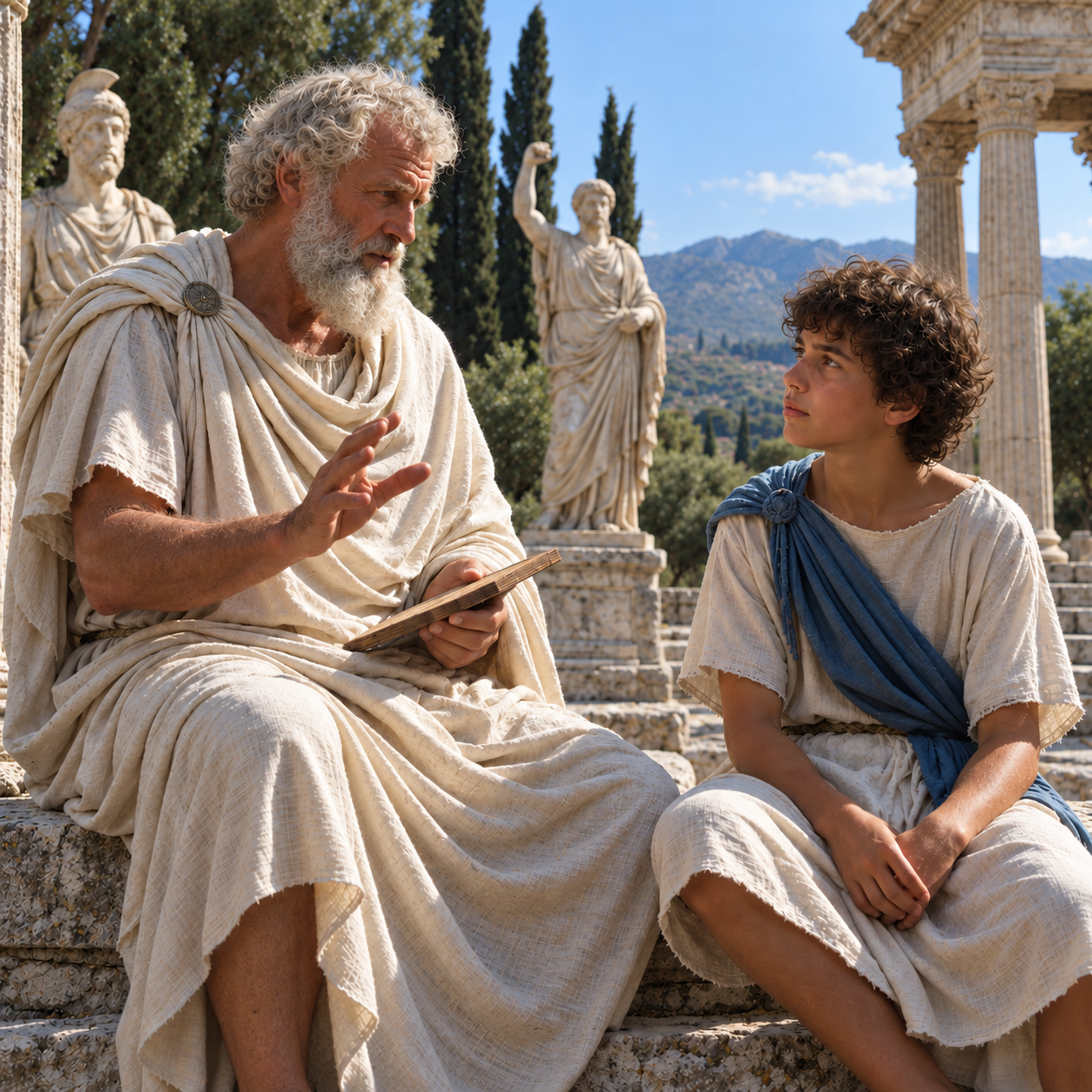
For much of history, if your family had enough power, wealth, or status, you could give your child something most other children could never have:
A brilliant teacher almost entirely to themselves.
The advantage wasn't just access to better information. Books eventually became cheap. Libraries became widespread. Then Google put more information in our pockets than ancient kings could have imagined.
So, it turns out, access to information has not been the bottleneck.
The scarce resource was personal attention.
A great tutor could notice exactly where a student became confused. Slow down. Try another explanation. Ask a question instead of giving an answer. Push harder when the student was ready. Back up when something had been missed.
In 1984, educational psychologist Benjamin Bloom famously described what became known as the "2 Sigma Problem": questioning how group education could achieve results approaching those possible through effective one-to-one tutoring?
The problem wasn't that educators didn't recognize the value of personalized instruction. It was that putting an excellent tutor beside every child was economically impossible.
Forty years later, that economic constraint may be starting to break.
And a fascinating experiment at Harvard gives us a glimpse of what could happen next.
What Happened at Harvard?
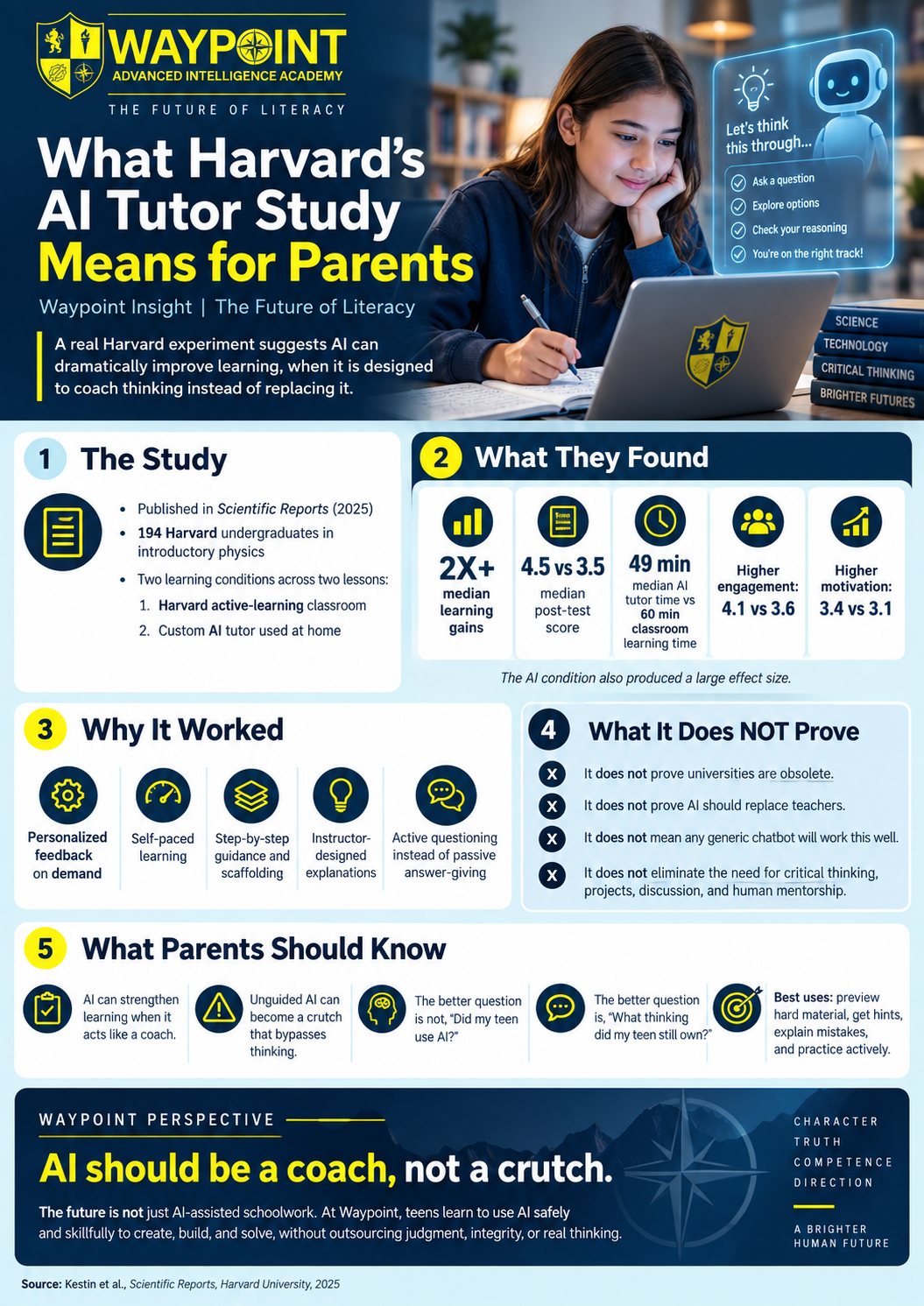
Last year Harvard researchers conducted a randomized controlled experiment with 194 students in an introductory physics course.
One condition used Harvard's active-learning classroom model. This was not some sleepy lecture hall with a professor reading PowerPoint slides. Students worked through problems, interacted with peers, and received instructor support.
The other condition used a specially designed AI tutor to teach the same material.
The students using the AI tutor learned significantly more in less time. The researchers reported that median learning gains were more than twice as large in the AI condition. Students also reported feeling more engaged and motivated.
That does not prove that Harvard is obsolete.
The experiment covered two lessons, not four years of university. It did not measure long-term retention, research experience, laboratories, friendships, mentorship, credentials, or everything else a university can provide.
But it demonstrated something important.
The AI could give each student something a classroom teacher simply cannot provide to everyone simultaneously:
continuous, individualized intellectual attention.
And the tutor wasn't successful because it made physics easy.
It was successful because it was carefully designed around good teaching. It used scaffolding, feedback, questioning and established principles from educational psychology. It helped students work through the material rather than simply handing them answers.
That distinction matters enormously.
What If Every Child Could Have a Tutor?
We've spent decades putting technology into classrooms.
First computers.
Then tablets.
Then Chromebooks.
Much of the time, we simply digitized the same educational model.
A worksheet on an iPad is still a worksheet.
AI creates a different possibility.
A student can now interact with something that responds.
Imagine a teenager struggling with algebra.
One student doesn't understand fractions.
Another understands the math but gets lost when variables appear.
Another has already mastered the material and is bored out of her skull waiting for everyone else.
A human teacher with 30 students has an almost impossible problem.
A personalized tutor doesn't have to teach the average student because there is no average student sitting in front of it.
It can teach this student.
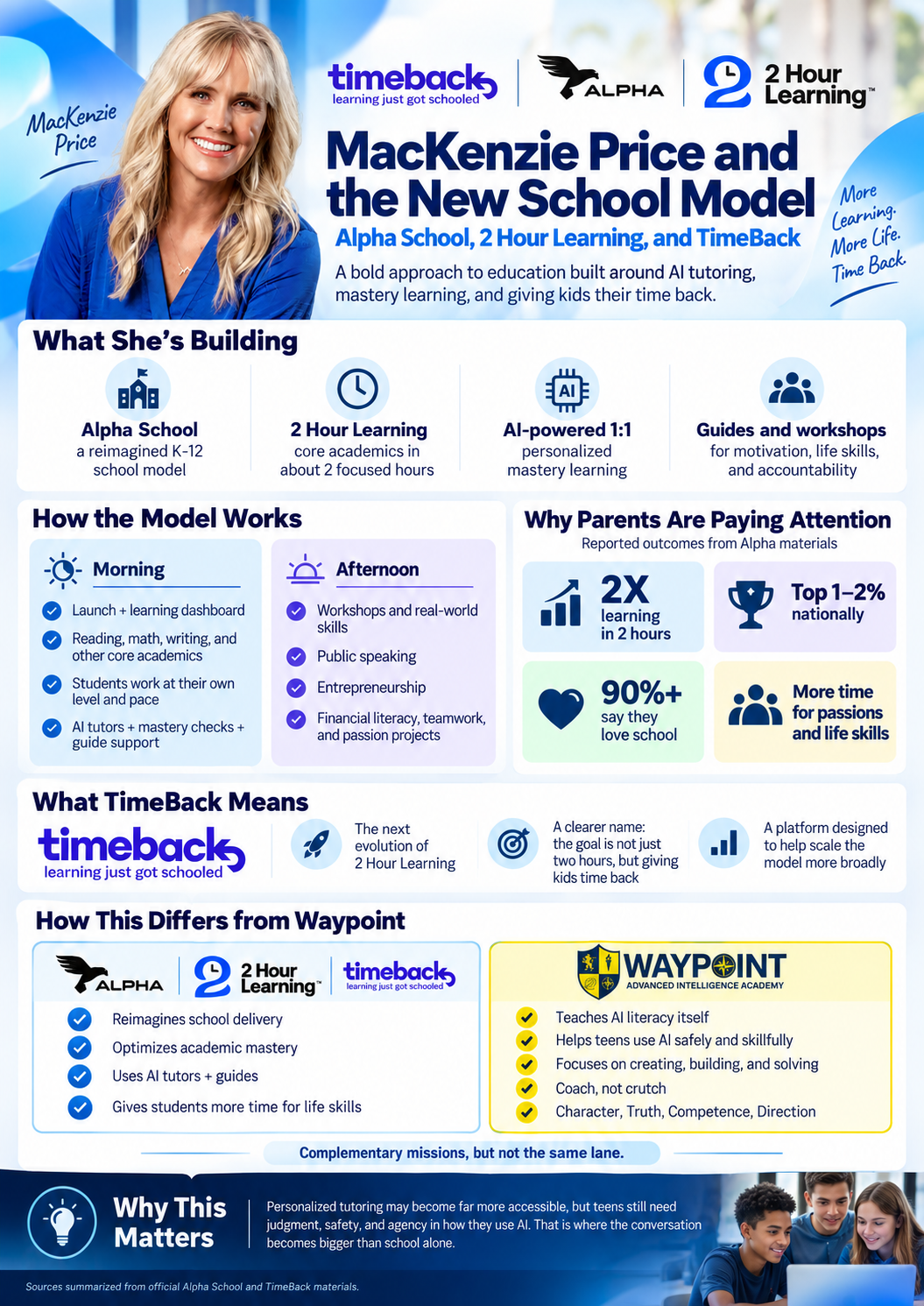
That's the important part of what MacKenzie Price and the team behind Alpha School have been exploring.
Alpha School Is Trying to Build Around This Idea
Alpha School has attracted attention for what it originally called 2 Hour Learning.
Students spend roughly two morning hours working through core academics using personalized, mastery-based learning software. Rather than moving forward because the calendar says it's time for the next chapter, students progress based on what they have actually mastered.
Human adults haven't disappeared.
Alpha calls them Guides. Their role shifts away from delivering the same academic lesson to everyone and toward motivation, emotional support, accountability, mentorship, and helping students become increasingly self-directed. Afternoons are then used for things such as entrepreneurship, public speaking, teamwork, physical activity, practical skills, and projects.
One detail about Price's philosophy deserves more attention than it gets.
Alpha's own explanation says educational technology is only about 10 percent of the solution. They attribute the other 90 percent to having a motivated student.
That sounds much less like "robots are replacing teachers" and much more like a serious rethink of what humans and machines are each good at.
Alpha reports very strong results on nationally normed MAP assessments, although parents should keep an important distinction in mind: those performance claims currently come primarily from Alpha's own analyses of its students' data. They are not yet equivalent to the independent randomized evidence from the Harvard experiment, and outside observers have reasonably raised questions about how well the model will generalize to students who need more direct structure.
Still, the model deserves attention.
Because Alpha may be showing us something larger than Alpha.
From 2 Hour Learning to TimeBack
Price and her team are now developing the next evolution of the model under the name TimeBack.
The name tells you something about the philosophy.
The goal isn't really to create a two-hour school day. Alpha students still attend school for a full day.
The goal is to ask why academics need to consume most of childhood if students can master the material more efficiently.
TimeBack is intended to expand the personalized-learning system behind Alpha and eventually make it available much more broadly. Its public site currently promotes a 2026 launch and waitlist, while Price has described ambitions to scale the system far beyond Alpha's physical campuses.
If systems like this work at scale, something remarkable begins to happen.
The educational experience once associated with wealth becomes much cheaper.
Not private jets.
Not marble libraries.
Not elite governesses or elite boarding schools.
Something more important:
A patient tutor who knows where you are, notices what you don't understand, and stays with you until you do.
That could become available to almost everyone.
But There Is a Catch
The same AI that can become an extraordinary tutor can also become an extraordinary way to avoid learning.
Ask it:
"Teach me how to solve this."
That's one interaction.
Ask it:
"Solve this for me."
That's another.
In the first, AI can increase human capability.
In the second, it can quietly replace it.
This is why I don't believe giving every teenager access to powerful AI automatically produces a generation of brilliant students.
We could just as easily produce a generation that becomes extremely skilled at getting machines to do things they never learned to do themselves.
The technology doesn't decide which future we get.
How we teach young people to use it does.
Where Waypoint Fits
I admire much of what Alpha and TimeBack are trying to accomplish, but Waypoint is solving a different problem.
Alpha is fundamentally asking:
How can technology help a student learn traditional academics more effectively?
Waypoint asks:
How do we prepare a teenager to live, think, create, work, and solve problems in a world filled with increasingly capable AI?
We're not trying to replace a teenager's school with an AI tutor.
We're teaching teenagers AI literacy itself.
That means learning how to use AI safely and skillfully to research, write, design, create images, produce audio and video, build systems, solve real problems, develop ideas and turn those ideas into useful things.
But there is another requirement underneath all of it.
They still have to think.
They still need judgment.
They still need integrity.
They need to recognize when AI is helping them develop a capability and when it is quietly becoming a substitute for one.
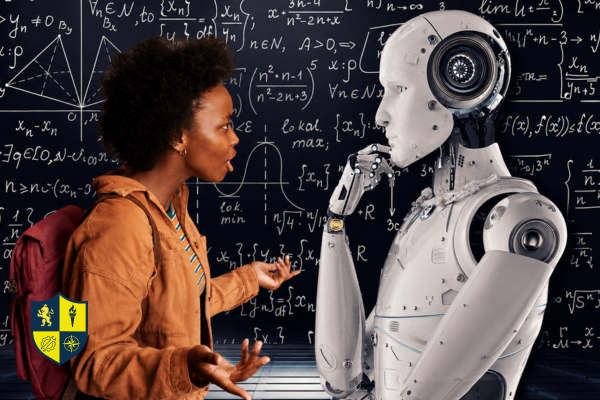
That is why one of our core principles at Waypoint is coach, not crutch.
I don't want our kids growing up afraid of powerful technology.
I also don't want them surrendering themselves to it.
I want them to become the kind of young adults who can stand in front of extraordinarily capable artificial intelligence and know what to ask, what to question, what to create, what to verify, what to reject, and what remains their responsibility.
Perhaps that is the real educational opportunity in front of us.
For thousands of years, the best personalized education money could buy belonged to a tiny fraction of humanity.
AI may finally make something remarkably close to it available to nearly every child.
Our challenge now is making sure the child becomes more capable because of it.
The tutor may soon be available to everyone.
Now we have to teach our kids how to use one.
Waypoint helps families raise safe, capable, future-ready teens in the age of AI. Inside our AI Pathfinder Certificate, teens learn to use AI wisely, honestly and creatively while developing the judgment to know when AI should help and when they need to do the thinking themselves.