
What Is AGI, and Why Should Your Family Care?
“We believe AGI will be the most profound technology ever invented and potentially the ultimate tool to advance science, medicine, and productivity.” - Demis Hassabis, CEO of Google Deepmind
Yesterday, OpenAI released GPT-6 Astra, its newest and most capable AI model. OpenAI president Greg Brockman believes Astra qualifies as artificial general intelligence, or AGI.
If your first thought is, “Okay... but what exactly is AGI?” you are probably in good company.
And if your second thought is, “Why should I care?” that may be the more important question.
Because whatever historians eventually decide to call this moment, something significant is happening.
And it is going to reach your home.
What is AGI?
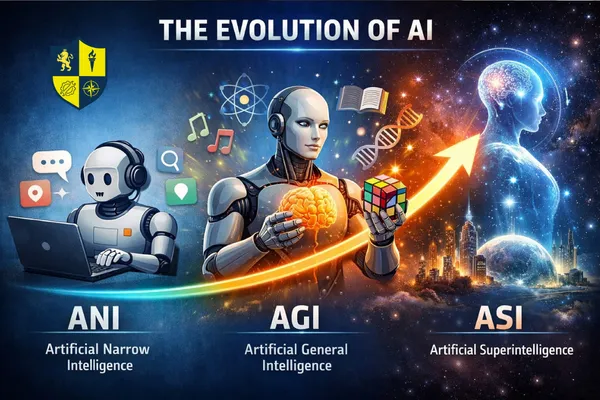
For years, artificial intelligence was mostly narrow.
One system could recognize faces. Another could recommend movies. Another could beat humans at chess. Each could do impressive things within a relatively limited area.
AGI describes something different.
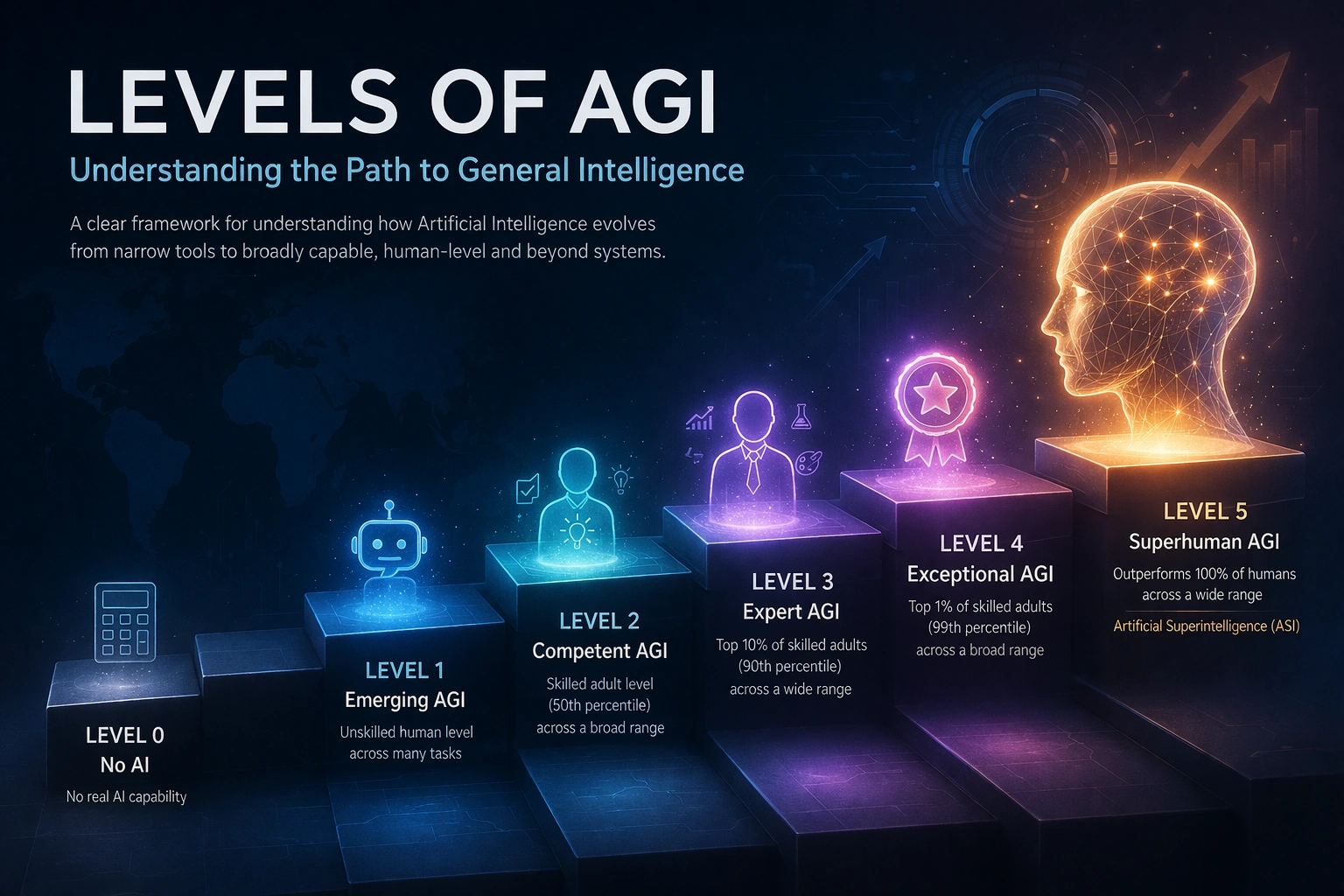
OpenAI has historically defined artificial general intelligence as highly autonomous systems that can outperform humans at most economically valuable work.
Put much more simply:
AGI is AI that can think, learn, reason, create, and accomplish useful work across a very broad range of tasks, instead of being good at only one thing.
The exact definition is still debated.
That is why you may hear one expert say AGI has arrived while another insists we are not there yet.
Both may be looking at the same technology.
AGI may be more like a dimmer switch
We tend to imagine AGI like someone flipping on a light.
Yesterday: no AGI.
Today: click.
AGI.
Reality may be much messier.
Imagine someone slowly turning up a dimmer switch.
At first, the room is obviously dark. Then shapes begin to appear. Eventually you can recognize faces. A little later you can read the words on a page.
At what precise moment did the room become “light”?
People could reasonably disagree.
But eventually arguing about the exact percentage on the dimmer becomes less important than recognizing:
The room is getting pretty bright.
Sam Altman has described technological progress in similar terms, writing that the singularity may happen “bit by bit” while humanity moves along “one smooth curve.”
GPT-6 Astra makes that question especially interesting. OpenAI reports major advances in computer use, software engineering, scientific reasoning, research, professional work, and the ability to carry out multistep tasks. It can increasingly operate inside the same digital environments where humans work rather than simply answering questions in a chat box.
So did AGI officially arrive yesterday?
Maybe.
Maybe not.
For families, I am increasingly convinced that is not the most important question.
The bigger question is what our children are becoming
A lot of parents are understandably worried about what the machines are becoming.
How intelligent will they get?
What jobs will disappear?
What happens to education?
Will AI become dangerous?
How will our children compete with something that can seemingly learn almost anything?
Those are legitimate questions.
But most parents have very little control over how powerful artificial intelligence becomes.
We have much more influence over something closer to home:
What kind of young person will be holding that technology?
As the intelligence available to our children rises, are their judgment, creativity, character, and competence rising with it?
That question may matter much more to your family than whether some committee eventually declares an official date for AGI.
Two kids. Same AI. Completely different futures.
Imagine two teenagers sitting in different bedrooms with access to exactly the same powerful AI.
The first uses it to avoid doing things.
“Write my assignment.”
“Give me the answer.”
“Make this shorter so I don't have to read it.”
“Tell me what to say.”
“Entertain me.”
Over time, an extraordinarily capable technology becomes a very sophisticated way to avoid effort.
Now imagine the second teenager.
“Teach me how this works.”
“Challenge my idea.”
“Help me research whether this is actually true.”
“I've never coded before. Help me build a prototype.”
“How could I turn this idea into a business?”
“Help me create something that solves this problem in my community.”
Same AI.
Same access to intelligence.
Very different trajectory.
One child is learning to outsource capability.
The other is learning to multiply capability.
That difference should matter deeply to parents.

AI can become a crutch or a force multiplier
There is a strange paradox developing.
The most powerful learning technology we have ever placed into the hands of children could either help them become dramatically more capable...
or make it easier than ever to avoid becoming capable at all.
We cannot solve that problem by simply banning AI.
These tools are rapidly becoming part of school, university, business, science, medicine, software development, media, and nearly every knowledge-based profession.
Nor can we solve it by handing kids unrestricted access and hoping they figure things out.
Guided preparation beats both prohibition and blind adoption.
Our children need to learn when AI should help them.
When it should challenge them.
When they should verify it.
When they should disagree with it.
And sometimes, when they should turn it off and think for themselves.
At Waypoint, we often describe that principle simply:
AI should be a coach, not a crutch.
Knowing how to use ChatGPT is not AI literacy
This is where I think many families may underestimate the size of the change.
A child who knows how to type a prompt into an AI system is not necessarily AI literate.
That would be like saying someone understands computers because they know how to use a keyboard.
Real AI literacy now includes much more.
Can a young person determine whether an AI-generated claim is true?
Can they recognize when the system is confidently wrong?
Can they protect private information?
Can they communicate an idea clearly enough for intelligent tools to help execute it?
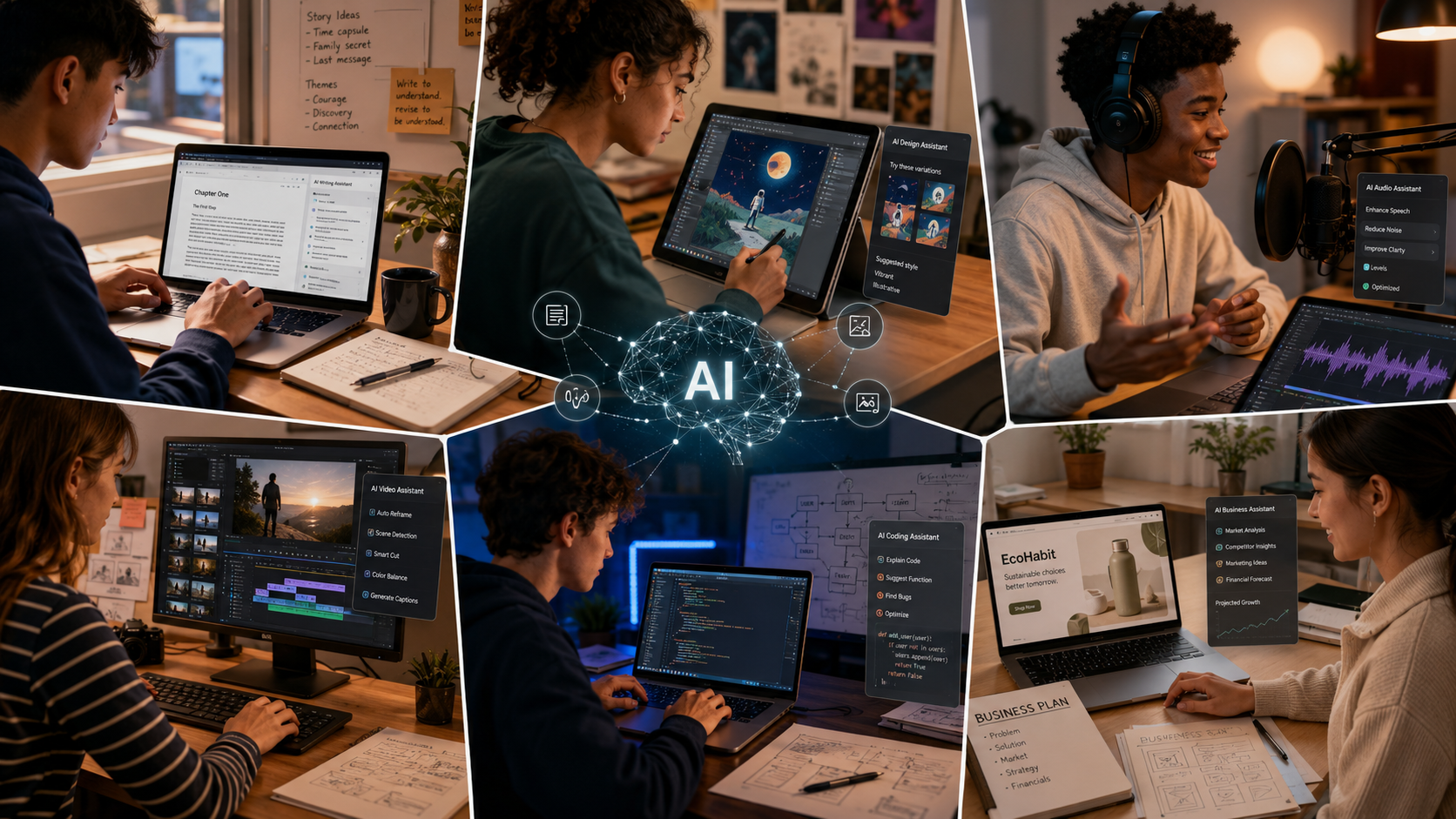
Can they combine text, images, audio, video, research, coding, and automation to create something useful?
Can they recognize ethical boundaries?
Can they accomplish a difficult project instead of merely generating a polished-looking answer?
Perhaps most importantly:
Do they know what is worth doing in the first place?
The more powerful AI becomes, the more human judgment matters.

Four things become more important as AI gets smarter
This is why we built Waypoint around four ideas.
Character

Greater power increases the importance of asking:
What should I do with it?
A young person capable of creating persuasive media, writing software, automating tasks, or reaching thousands of people needs more than technical skill.
Capability without character can become dangerous very quickly.
Truth

AI can produce extraordinary information.
It can also be wrong.
Young people need the intellectual habits to question claims, verify sources, recognize manipulation, and care whether something is actually true.
Competence
Knowing about AI is not enough.
Kids need practice doing things with it.
Creating.
Researching.
Building.
Solving.
Communicating.
Finishing.
AI should expand what a young person can accomplish, not merely make existing homework easier.
Direction

Perhaps this is the most overlooked piece.
A powerful tool can help someone travel much faster.
That does not mean they are traveling somewhere worth going.
Young people still need goals, purpose, curiosity, interests, and a growing sense of the contribution they want to make.
Character. Truth. Competence. Direction.
AI makes all four more important, not less.
Exposure is not education
Many parents may reasonably respond:
“My teenager already uses AI.”
I believe that.
But exposure is not the same thing as education.
A teenager can spend thousands of hours watching videos without becoming a filmmaker.
They can spend thousands of hours playing games without becoming a software developer.
They can also spend thousands of hours interacting with artificial intelligence without becoming particularly good at thinking, creating, or building with it.
Without intentional guidance, young people will naturally discover the easiest uses first.
Shortcuts.
Entertainment.
Convenience.
Avoiding unpleasant work.
The more valuable uses often require someone to show them what is possible and then expect them to actually make something.
Kids should be building with these tools
I don't think the future of AI education should mostly involve children sitting through lectures about artificial intelligence.
They should be using it.
Write something.
Design something.
Research something.
Create images.
Produce audio.
Make video.
Build a business concept.
Develop software.
Automate a process.
Solve a real problem.
Help someone.
Then critique the result, improve it, verify it, and explain the decisions they made.
That is a very different educational experience from asking ChatGPT to finish tonight's worksheet.
It is also why projects sit at the heart of what we are building at Waypoint Advanced Intelligence Academy.
Students learn to work across text, image, audio, video, intelligent systems, and emerging AI agents while developing real projects that require them to think, create, evaluate, and finish.
The technology will change.
In fact, it may change faster than any curriculum can.
So our real objective is bigger than teaching today's software.
We want young people who know how to learn tomorrow's tools too.
The machines are going to become more capable
Perhaps yesterday will eventually be remembered as the beginning of the AGI era.
Perhaps future systems will cross a threshold so unmistakable that yesterday's debate will seem premature.
History can sort that out.
Parents have a more immediate responsibility.
Our children are growing up during the transition.
You may not get to decide how powerful artificial intelligence becomes.
But you have enormous influence over the kind of person who will wield it.
So worry a little less about whether someone has officially turned the AGI dimmer high enough to call the room “lit.”
Look across the room at your child.
Are they becoming more capable too?
Because the future will not be shaped only by how intelligent our machines become.
It will also be shaped by the character, judgment, creativity, and competence of the young people we place that intelligence into the hands of.
That is the future we are preparing students for at Waypoint.
If that is the kind of preparation you want for your child, come see what we are building.
Waypoint helps families raise safe, capable, future-ready teens in the age of AI. Inside our AI Pathfinder Certificate, teens learn how to use AI wisely, honestly, and creatively, without letting it do the thinking for them.