When AI Can Do the Homework, What Does It Mean to Be Educated?
“We are drowning in information, while starving for wisdom." - E.O. Wilson
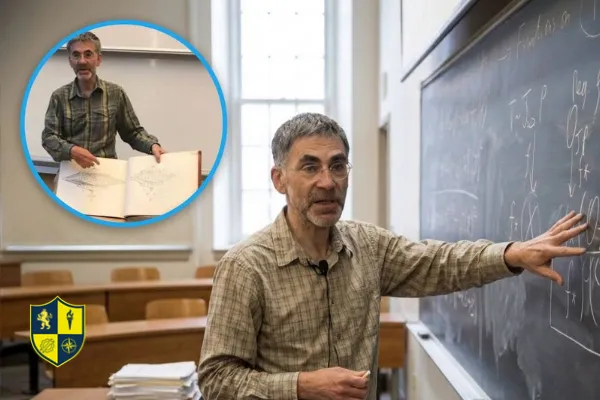
A math professor who has won one of the world's most prestigious academic awards made the news this week announcing that he is essentially given up grading homework for correctness.
Richard Borcherds, a professor at UC Berkeley and recipient of the Fields Medal, recently explained that AI has made traditional homework grading increasingly meaningless.
Students can now easily use AI to solve complex equations and produce impressively accurate papers. Grading those solutions for correctness would unfairly reward students who rely on AI, while potentially penalizing those who struggle honestly through the work.
He has decided that he will now give everyone credit just for turning in their assignments on-time, but he'll need to shift to supervised, in-person examinations to evaluate students' actual abilities.
Considering the ratio of students to teachers, he readily acknowledges that this isn't an ideal system. He simply doesn't know what would work better.
For parents, this story raises some uncomfortable questions.
If AI can complete our children's assignments, write their essays, solve their equations, and eventually outperform their teachers in many intellectual tasks, what exactly should our children be learning?
And how will we know whether they're actually learning it?
These are reasonable concerns. But I believe they also point toward one of the greatest educational opportunities we've encountered in a century.
We have an extraordinary chance to reconsider what it truly means to become educated.
When Perfect Homework Tells Us Almost Nothing
For generations, schools have relied heavily on completed assignments to measure learning.
A student writes an essay, solves a problem, or produces a research paper. The teacher evaluates the result and assigns a grade.
But what happens when a teenager can produce professional-quality work without necessarily understanding how it was accomplished?
One student might spend hours studying the subject, questioning assumptions, evaluating evidence, and organizing arguments. Then use AI to help them identify weaknesses and improve the final draft.
Another student simply asks ChatGPT to write the entire paper, makes a few adjustments, and submits it.
The results might be nearly identical.
The educational experiences are worlds apart.
AI isn't inherently a problem, but how you use it could be. A student might use AI to explore a subject far beyond their current ability, learning through the process and producing something they could never have created alone.
That is a legitimate educational accomplishment.
The challenge is distinguishing between AI that develops a student's capabilities and AI that quietly replaces the very effort through which those capabilities develop.
At Waypoint, we describe this as using AI as a coach rather than a crutch.
The distinction is becoming fundamental to education.
When Everyone Has a Genius in Their Ear
We're approaching a future in which sophisticated AI assistants may become constant companions, available through glasses, earbuds, phones, and other wearable devices.
Imagine your teenager having an exceptionally knowledgeable personal assistant ready to explain almost anything, at any moment.
An unfamiliar historical reference? Explained.
A complicated mathematical concept? Clarified.
A conversation in another language? Translated.
An idea for a business? Researched and developed.
That brings us to something educational thinker E. D. Hirsch raised in his influential 1987 book, Cultural Literacy.
Hirsch argued that societies depend on a shared foundation of knowledge. History, literature, cultural references, and familiar stories help people understand one another and participate in a common civic life.
But what happens when personal AI can instantly explain nearly any unfamiliar reference?
A teenager who has never studied Greek mythology might immediately understand an allusion to a Trojan horse.
Technology has helped overcome a genuine obstacle to communication.
Yet understanding the reference isn't equivalent to having read The Odyssey, experienced its characters, considered its moral dilemmas, or explored how its stories influenced centuries of literature (and no, the movie doesn't count).
Some knowledge can be retrieved in seconds. Other understanding is cultivated through sustained experience.
And there is a broader social question.
If everyone relies on their own personalized AI to interpret history, literature, and current events, will we develop greater mutual understanding or retreat into increasingly individualized versions of reality?
Technology could help us discover perspectives previously unfamiliar to us. It could also reinforce our existing assumptions.
Our children will need the judgment to tell the difference.

Maybe We've Been Measuring the Wrong Things
For many families, education has become closely associated with grades, diplomas, admission requirements, and career preparation.
Those things have practical value.
But surely an excellent education should accomplish something greater.
We want young people who understand the world around them, appreciate the lessons of history, think independently, govern their emotions, and treat others with dignity.
We want them to recognize truth, make wise decisions, develop useful abilities, and pursue meaningful goals.
And we want them to be capable of using the remarkable tools their generation will inherit.
At Waypoint, we organize those aspirations around four foundational values.
Truth develops a sound understanding of reality and the discernment to evaluate information, including the answers AI provides.
Character cultivates integrity, responsibility, courage, and self-governance, especially when shortcuts are available.
Competence develops genuine abilities, including the skill to direct AI toward increasingly ambitious and worthwhile accomplishments.
Direction helps young people discover their interests, identify meaningful goals, and decide what kind of contribution they want to make.
Together, these values support a larger purpose: human becoming.
An educated person should be more than someone who can produce impressive answers.
They should be someone whose education has helped them become more capable of living a meaningful, responsible, and productive life.
The Classics, Human Mentors, and AI Belong Together
E.O. Wilson observed that we are living through a time when we are drowning in information while starving for wisdom. It is not a new problem that the world contains more books than a person could read in a lifetime. Wise people understood that the secret is to spend your limited time only on the best books.
To become truly educated, families must continue introducing their children to great books, important historical events, beautiful art, mathematics, science, and enduring philosophical questions.
Those experiences help build the internal foundation from which genuine understanding grows.
But AI offers exciting possibilities for making this education more accessible and engaging.
A student reading Shakespeare could ask an AI tutor to explain unfamiliar language, describe historical context, or challenge their interpretation of a character.
A teenager studying the American founding could explore competing arguments between Federalists and Anti-Federalists, examine original documents, and debate their significance with a human mentor.
A young entrepreneur could use AI to research markets, test ideas, and develop a real business while learning responsibility through actual customers and consequences.
This is the kind of education that excites me.
One that combines our cultural inheritance with personalized learning, excellent mentorship, meaningful real-world experiences and some intelligent group discussions with peers.
What Parents Can Do Today
You don't need to redesign your child's entire education this week.
Start with one assignment, project, or activity involving AI.
Try asking three simple questions:
Before beginning: What do you want to understand or become capable of doing through this experience?
While working: How is AI helping you think, explore, and improve? Which decisions and responsibilities are yours?
After finishing: What can you now explain, demonstrate, or accomplish that you couldn't before?
These conversations can reveal more about genuine learning than a perfect homework score.
Sometimes the right choice will be to put AI away and develop a foundational skill independently.
Other times, the best choice will be to use AI enthusiastically to explore something far beyond the student's previous capabilities.
Both approaches have a place.
The guiding principle is whether the experience is helping the teenager grow.
The Future of Education Is About Becoming
Professor Borcherds may have stopped grading homework for correctness, but his predicament reveals something much larger than an assessment problem.
The methods we've used to measure education are being challenged by machines that can increasingly perform the tasks those methods were designed to evaluate.
We fight back by trying to preserve every traditional assignment and examination.
We can surrender and allow AI to do whatever students find inconvenient.
Or we can take this opportunity to reconsider what a truly excellent education should accomplish.
I hope we choose that third path.
We should absolutely care about what our children are capable of without AI. But we should be just as excited to discover what they might accomplish with it.
Because our children are growing up with access to more intelligence than any generation in human history. As parents we need to appreciate that these bright souls were born for such a time as this.
That makes wisdom, character, competence, and direction more valuable than ever.
The greatest question facing education in the AI age isn't how much intelligence our children will have access to. It's who they will become while learning to use it.
And that is a question every family deserves to help answer.
At Waypoint AI Academy, we help parents raise safe, capable, future-ready teens who use AI wisely, creatively, and responsibly. We believe powerful technology should strengthen human development and family relationships, and we're helping families learn how to make that happen. Learn more at WAIAcademy.com.